3-Day Horse Photoshoot Plan: Tbourida Fantasia Event
Overview
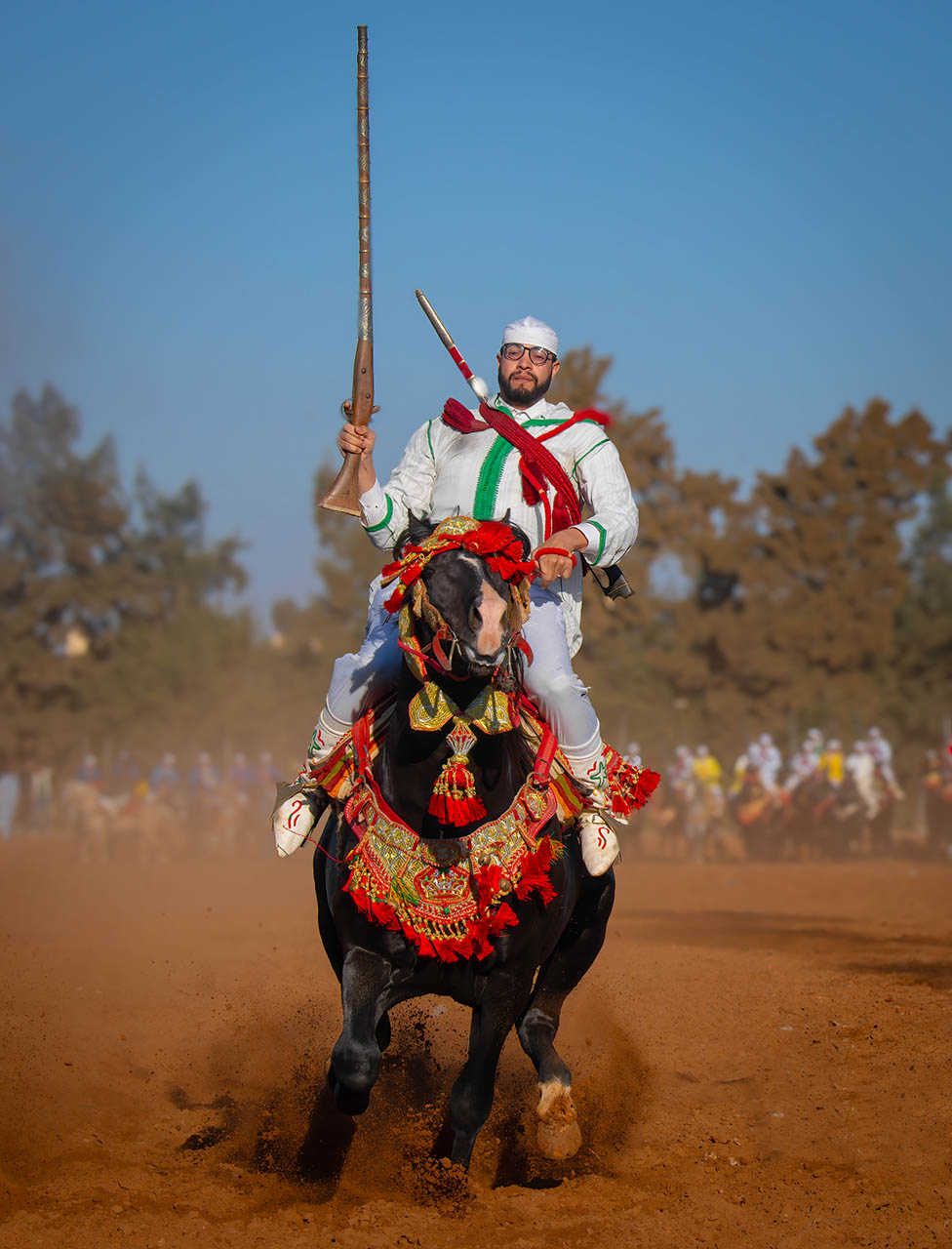
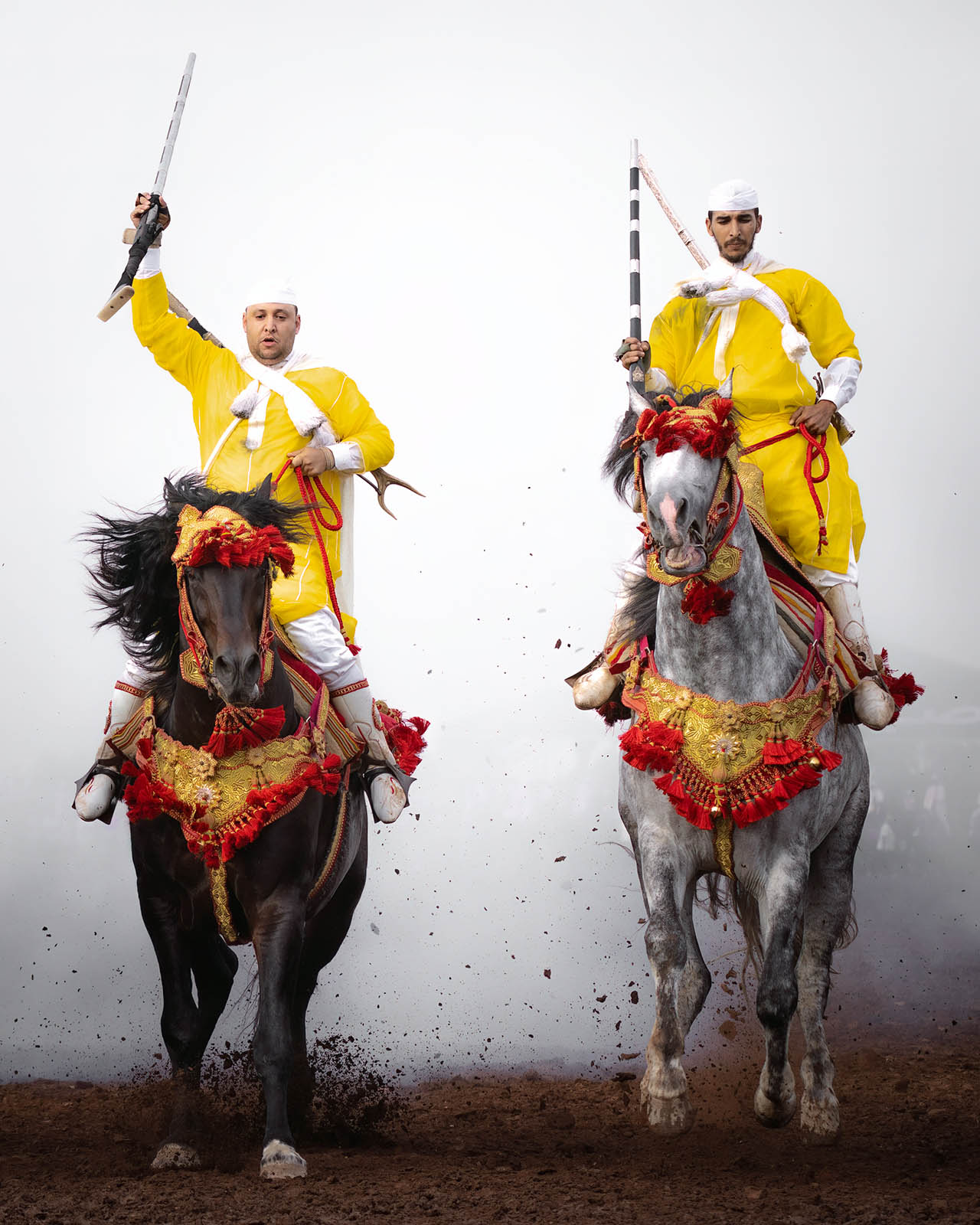
A three-day photography journey capturing the energy, tradition, and artistry of a Tbourida Fantasia. The focus is on dynamic action, cultural storytelling, and environmental context through a mix of telephoto and wide-angle perspectives.
Day 1 — Action & Atmosphere
Morning: Travel & Setup
- Travel to a nearby rural area hosting a Tbourida competition.
- Scout the location for best vantage points (formation area, charge path, crowd zones).
- Prepare gear: telephoto lens (70–200mm or 100–400mm), wide-angle lens (16–35mm), extra batteries, and dust protection.
Shooting Focus
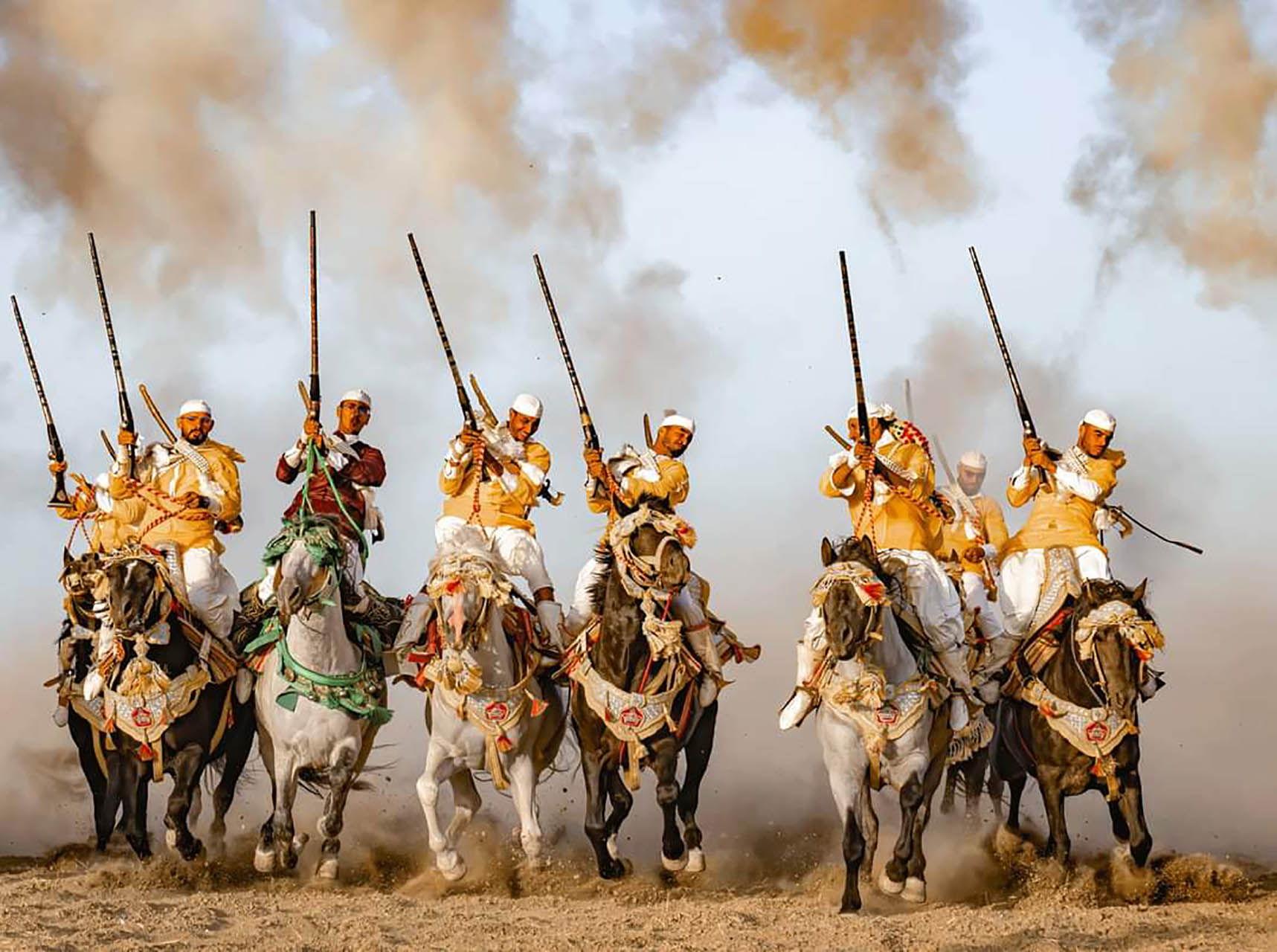
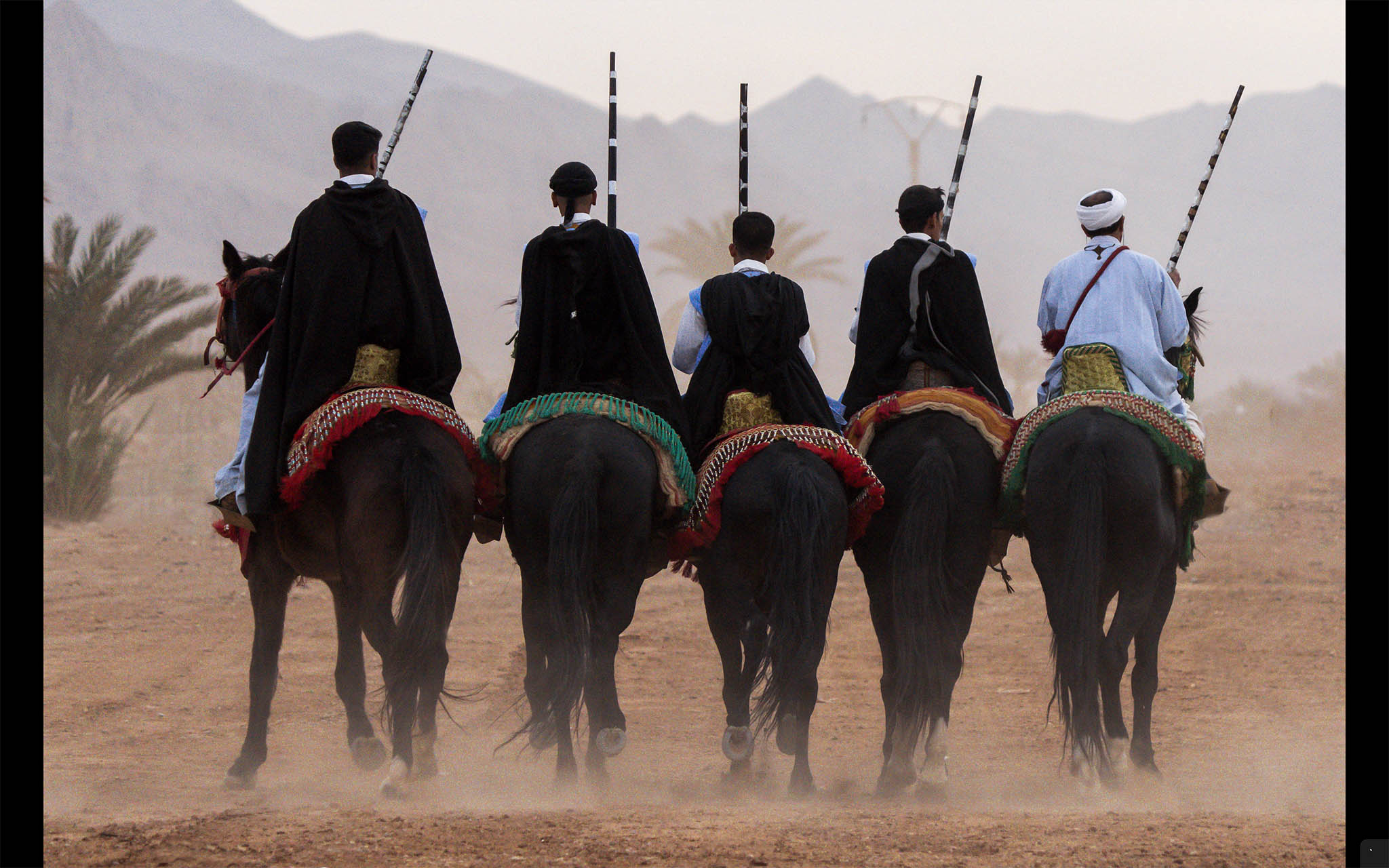
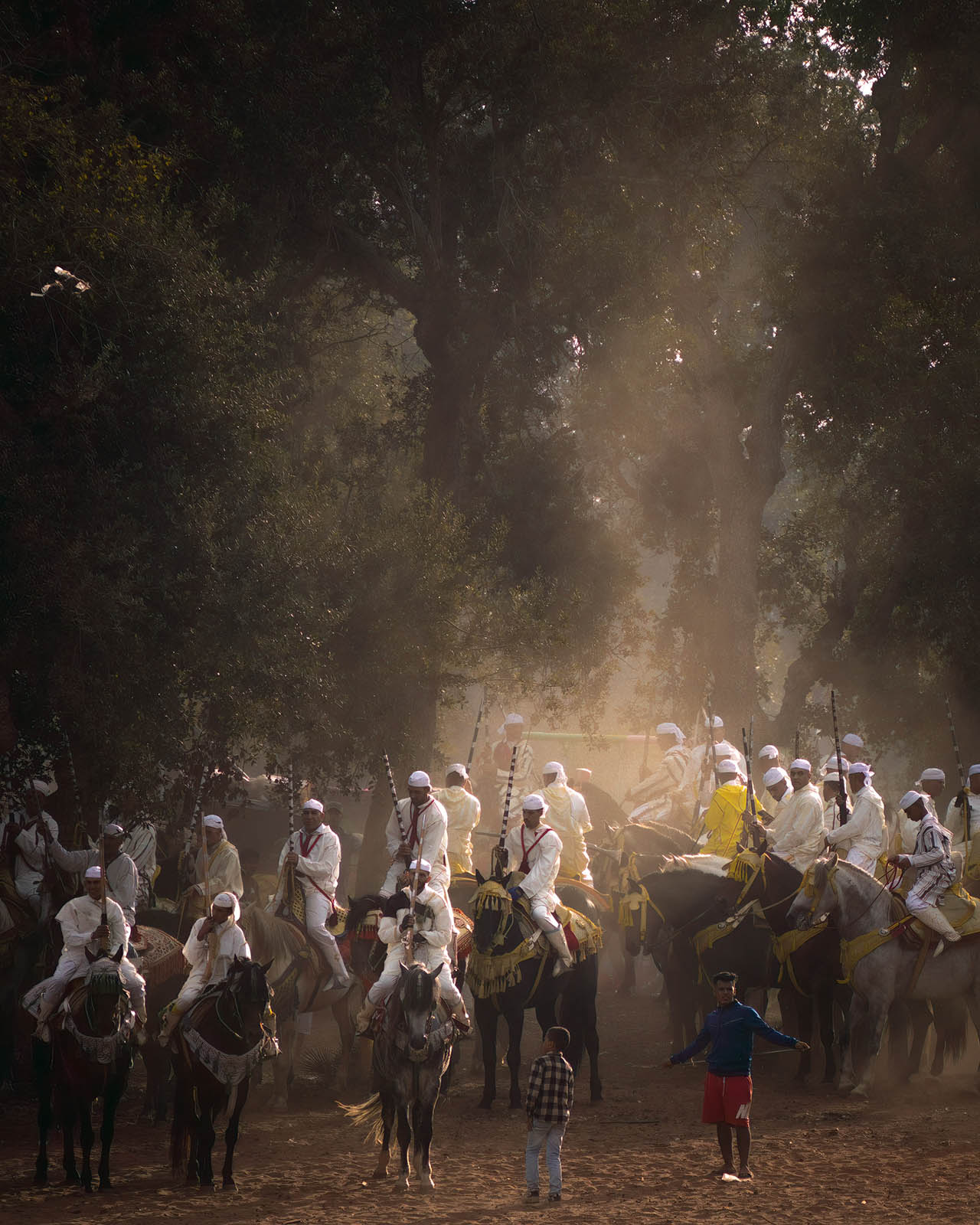
- Formation Lineup
- Capture horse squads aligned in formation.
- Wide shots for symmetry and scale.
- Low-angle perspectives to emphasize power and unity.
- Riders in Motion
- Document synchronized movement as riders prepare for the charge.
- Use continuous burst mode to capture transitions.
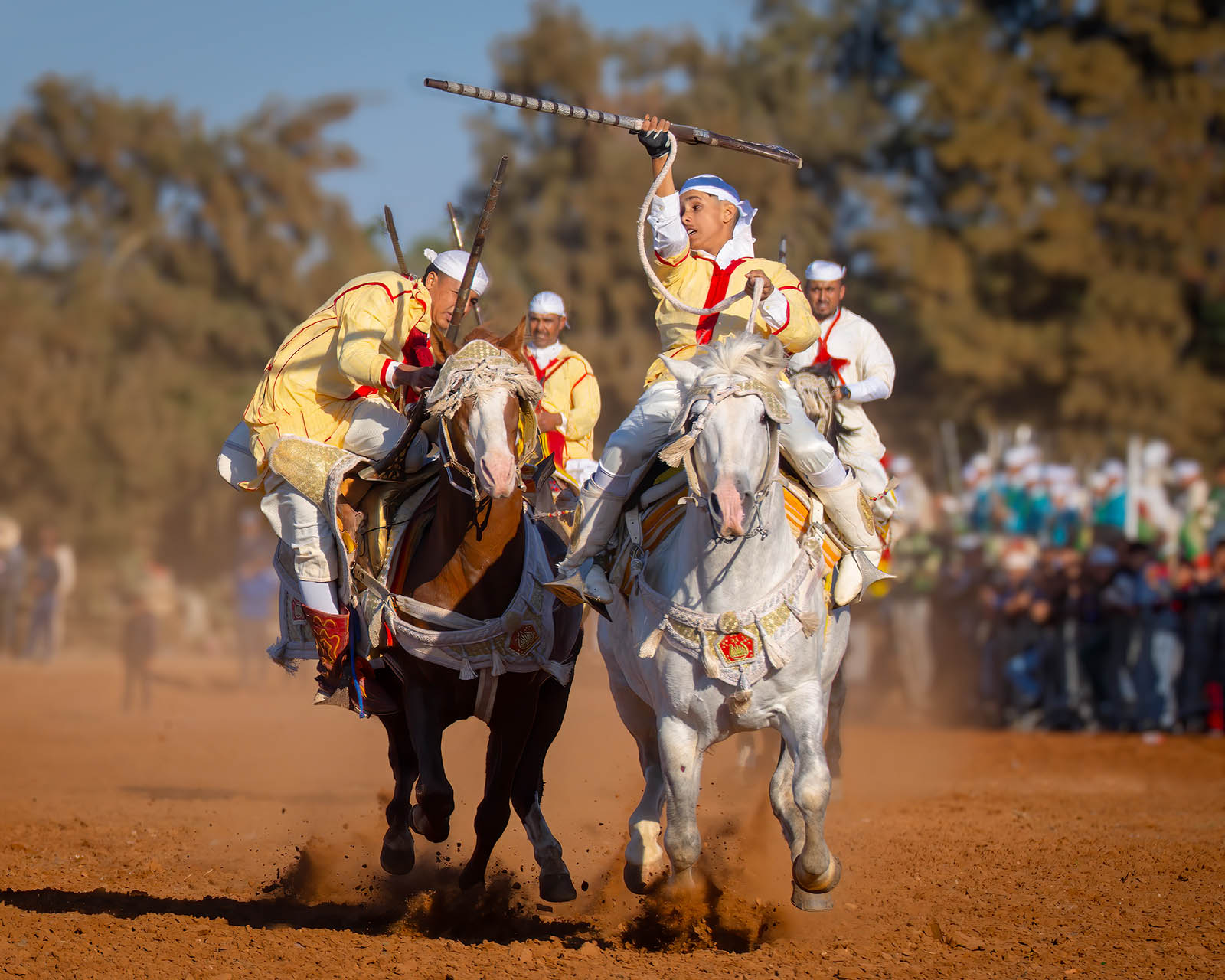
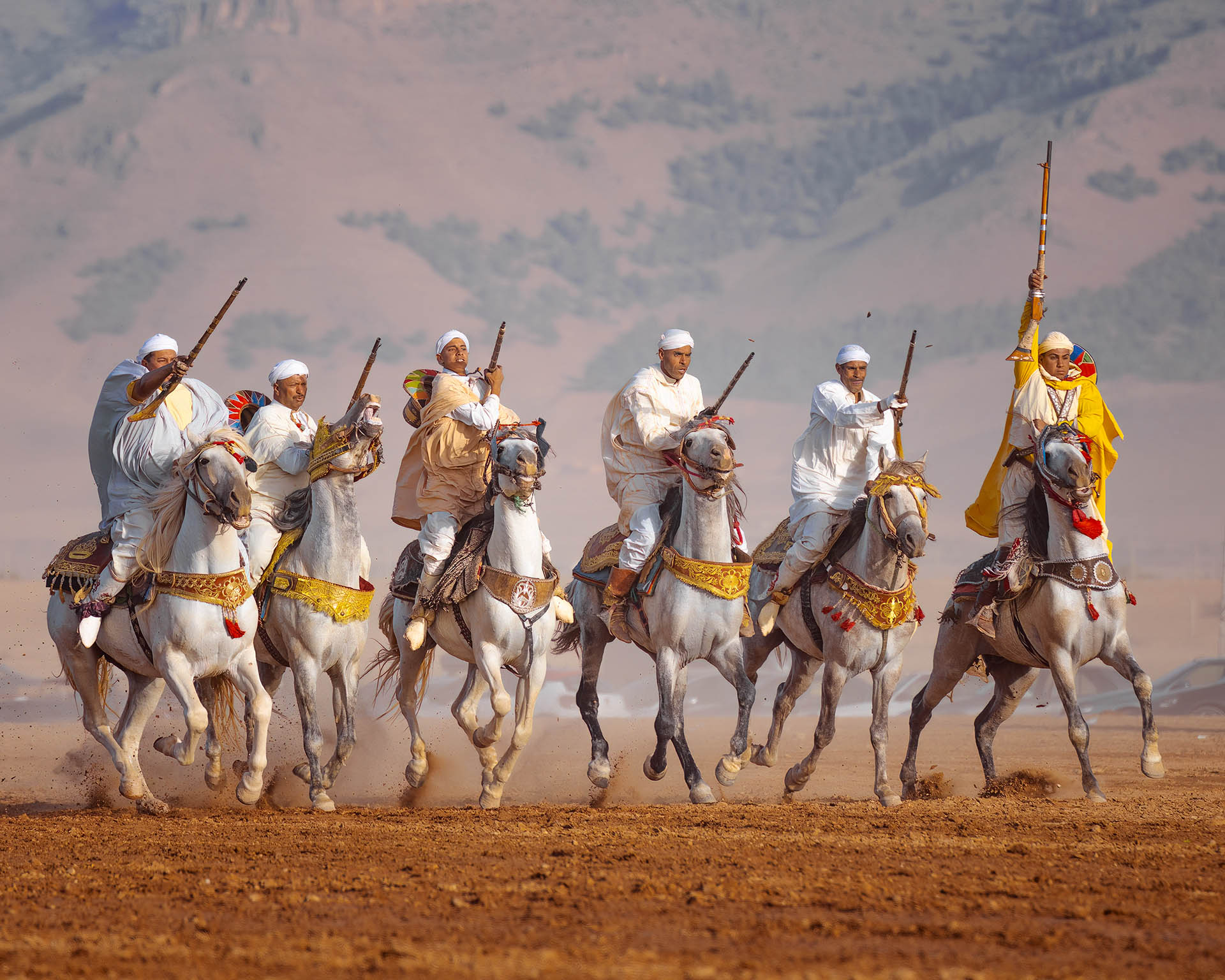
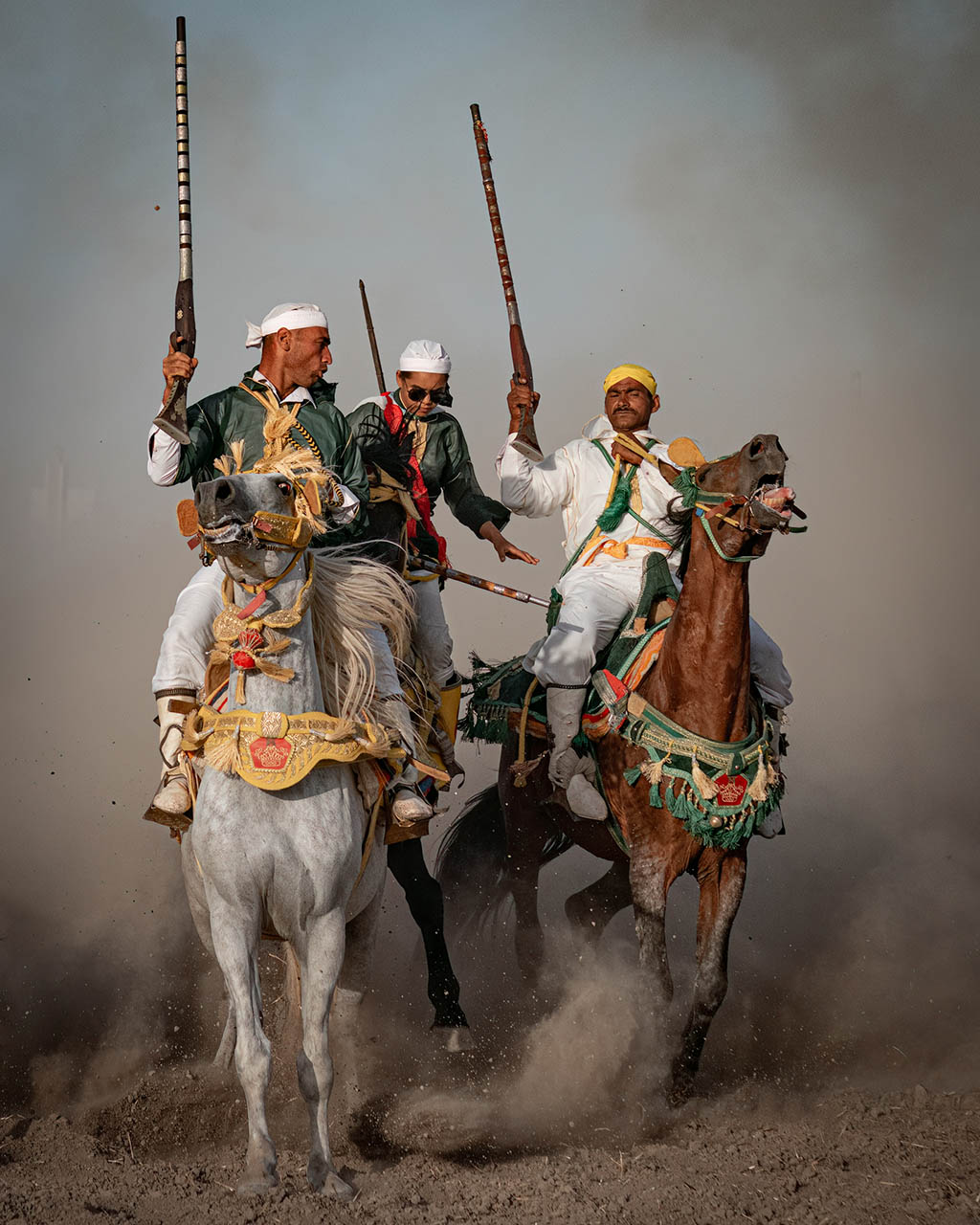
- The Charge Sequence
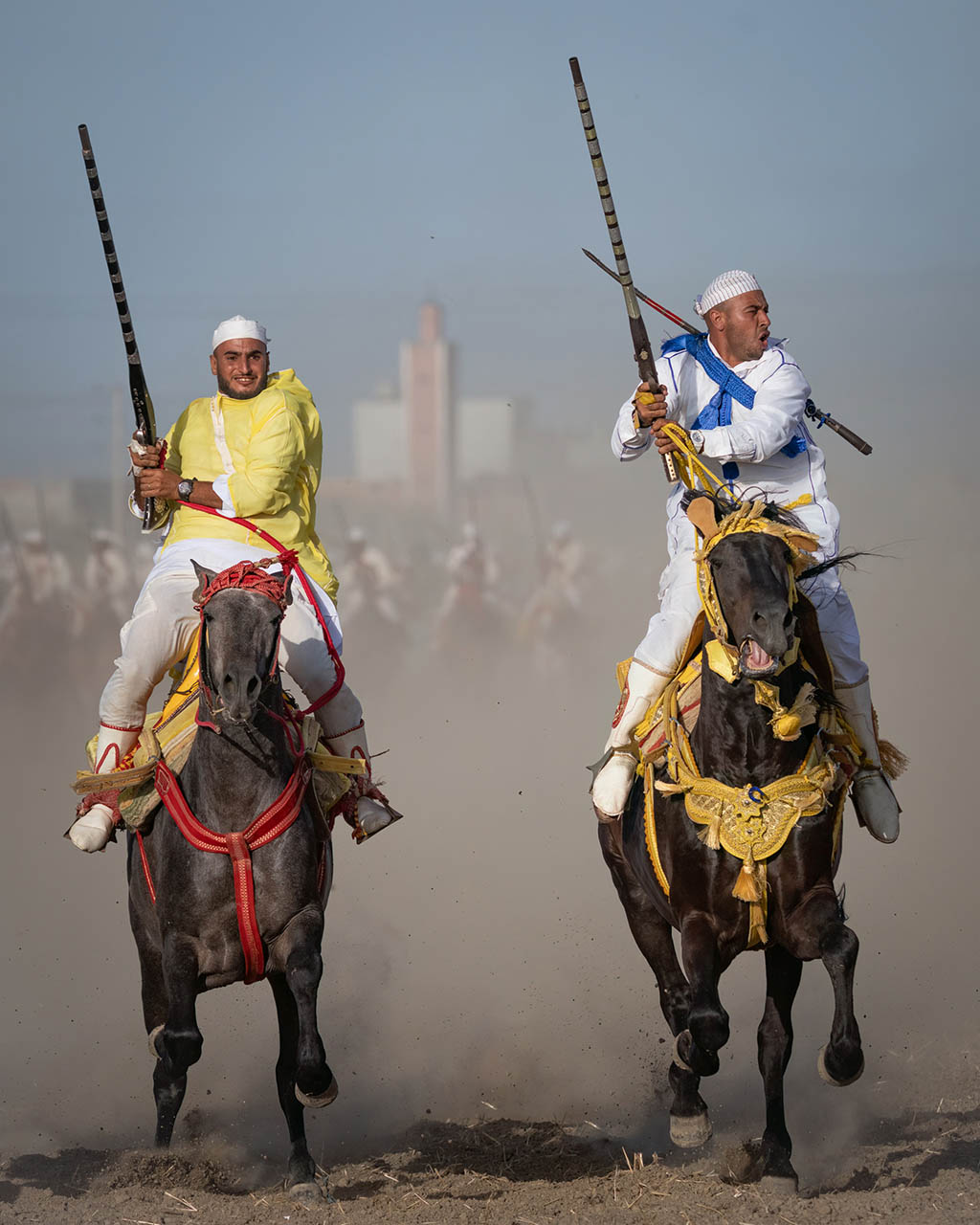
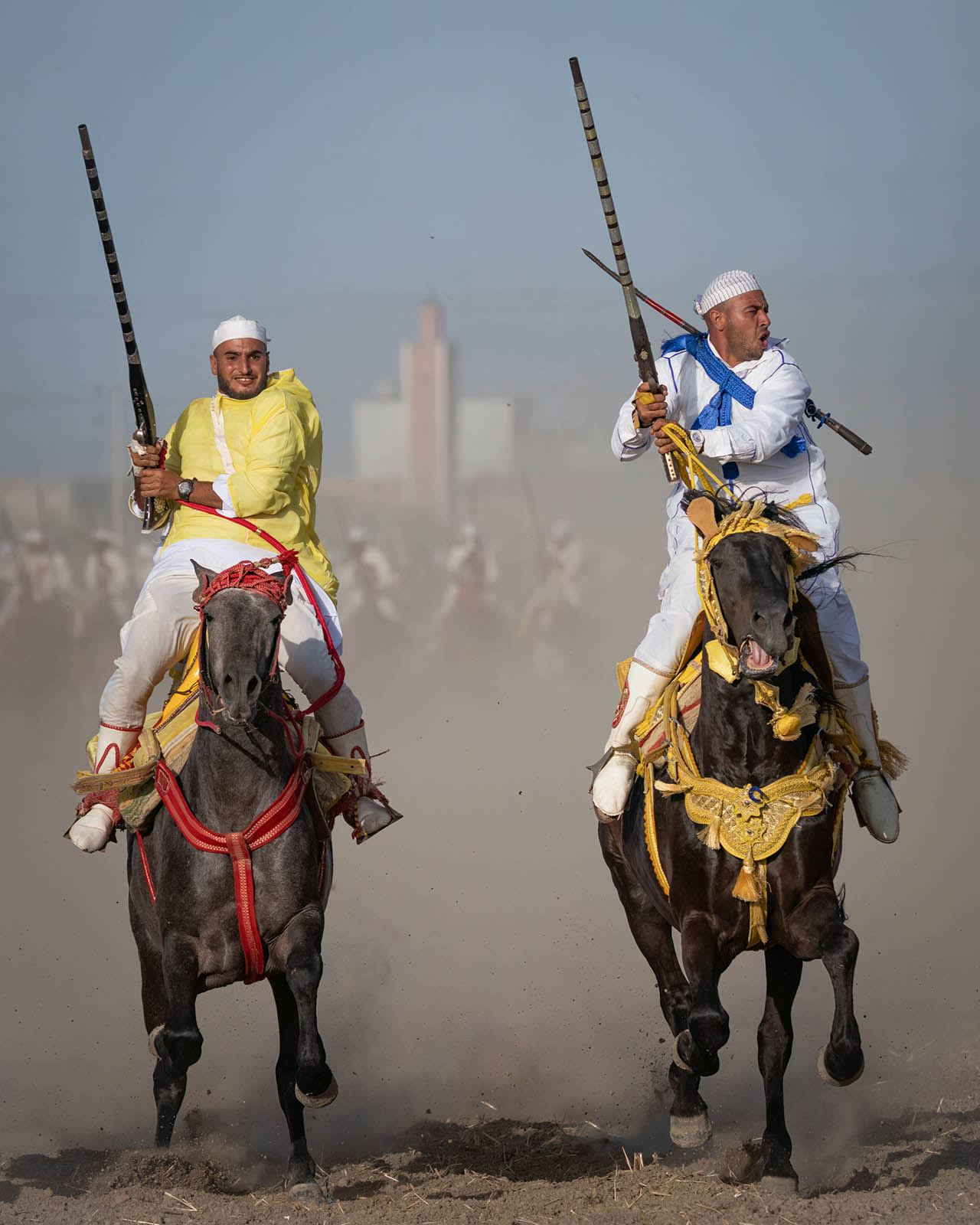
- Key moment: horses accelerating in unison.
- Fast shutter speed to freeze action.
- Panning shots for motion blur and energy.
- Telephoto compression for dramatic depth.
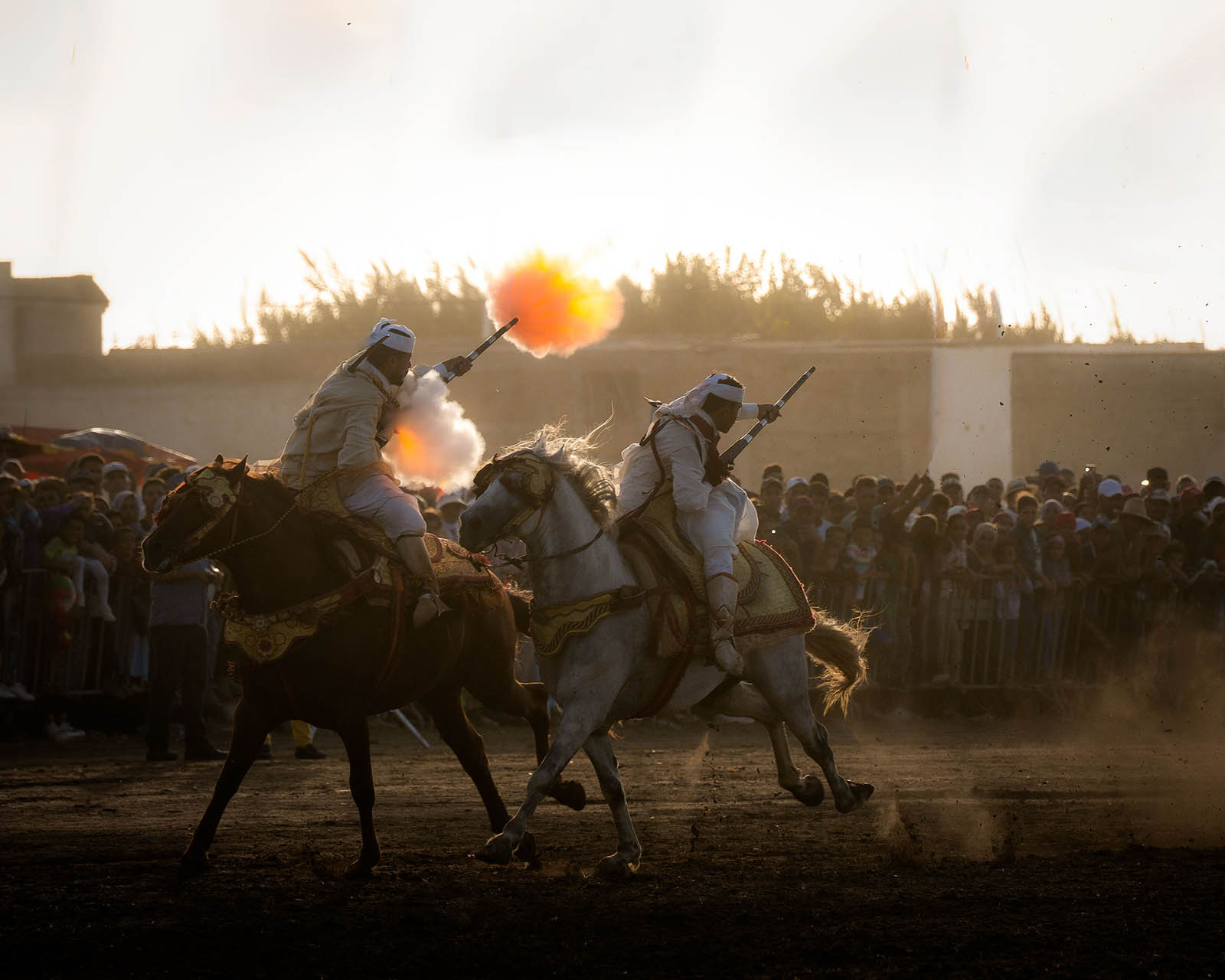
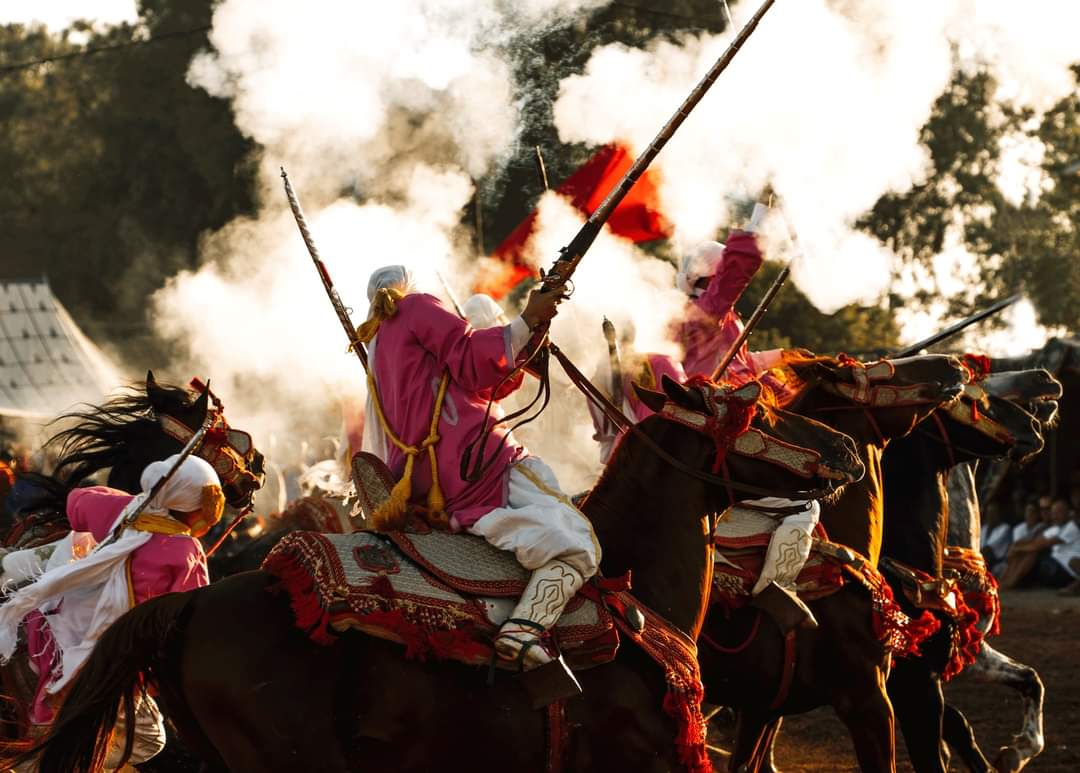
- Final Rifle Firing (“Baroud”)
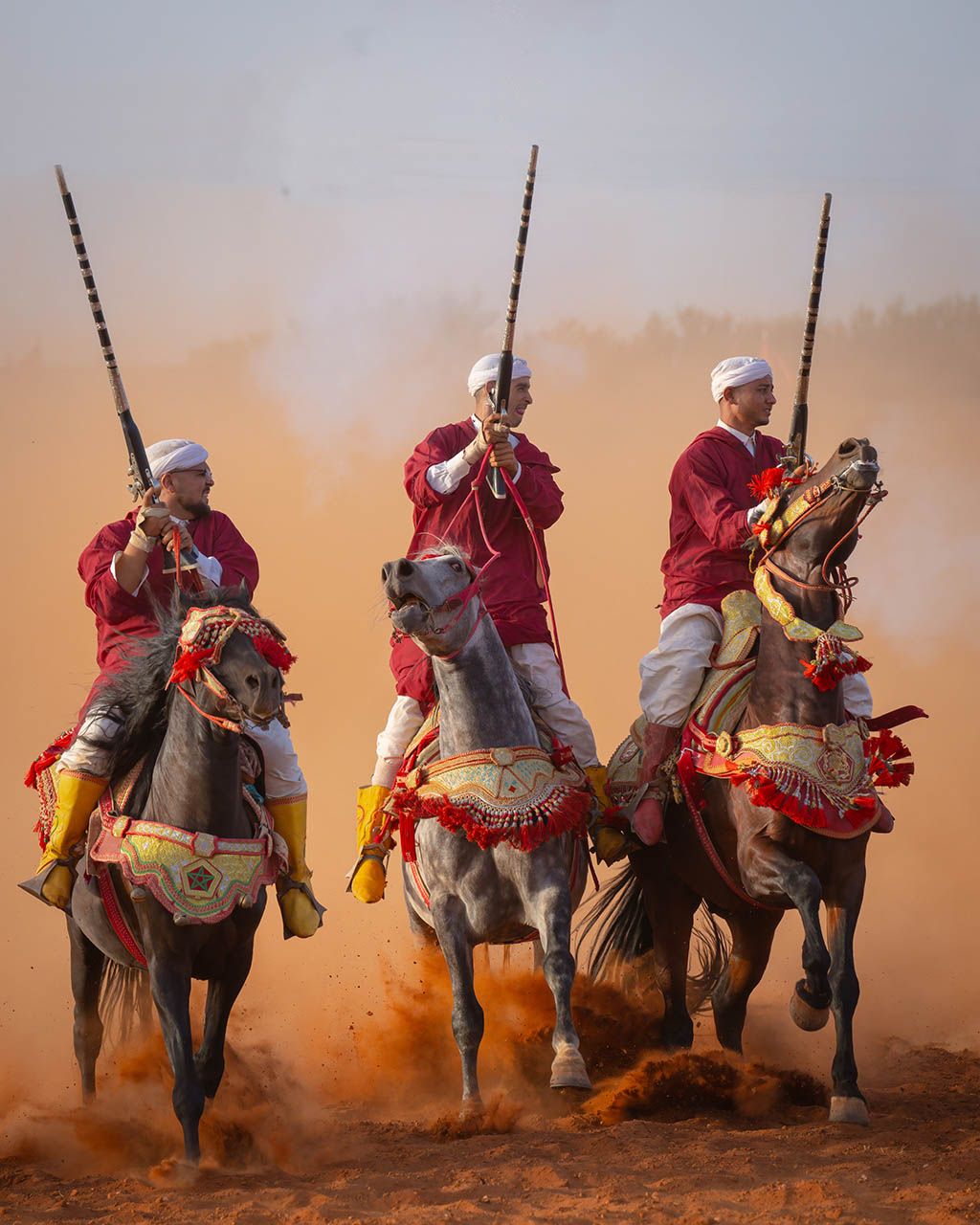
- Capture simultaneous rifle discharge.
- Focus on smoke bursts, dust clouds, and rider expressions.
- Use burst mode for multiple frames of the same instant.
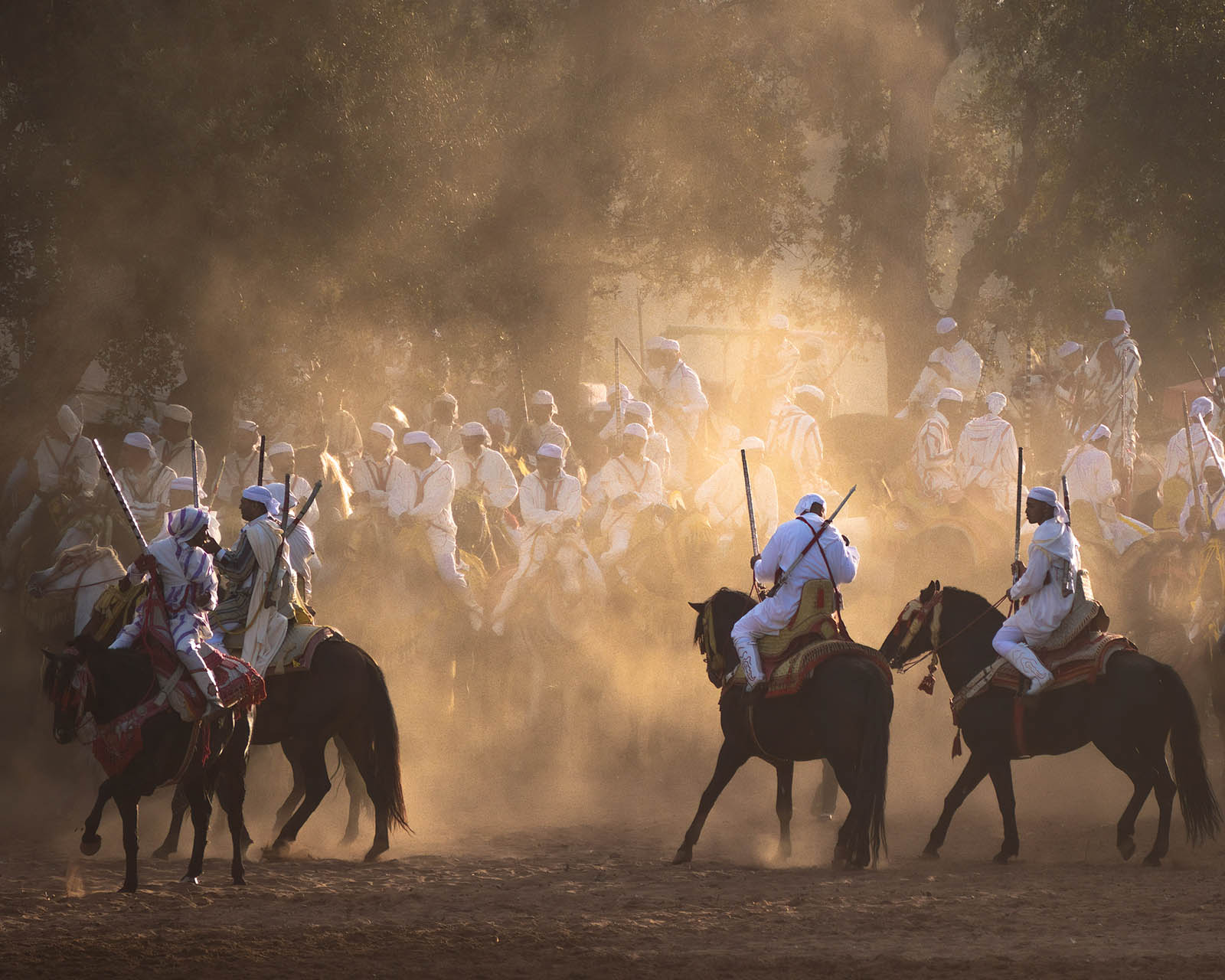
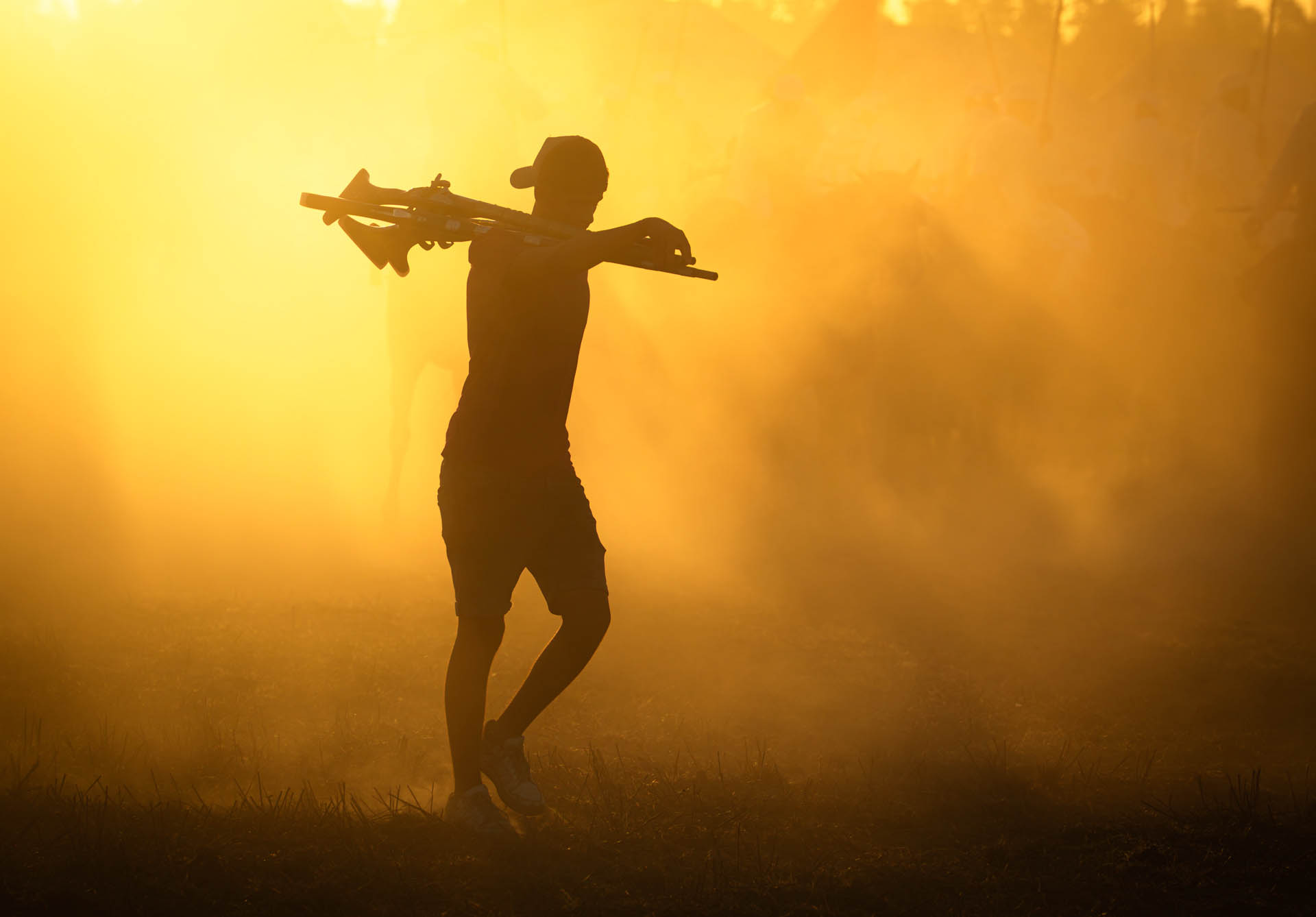
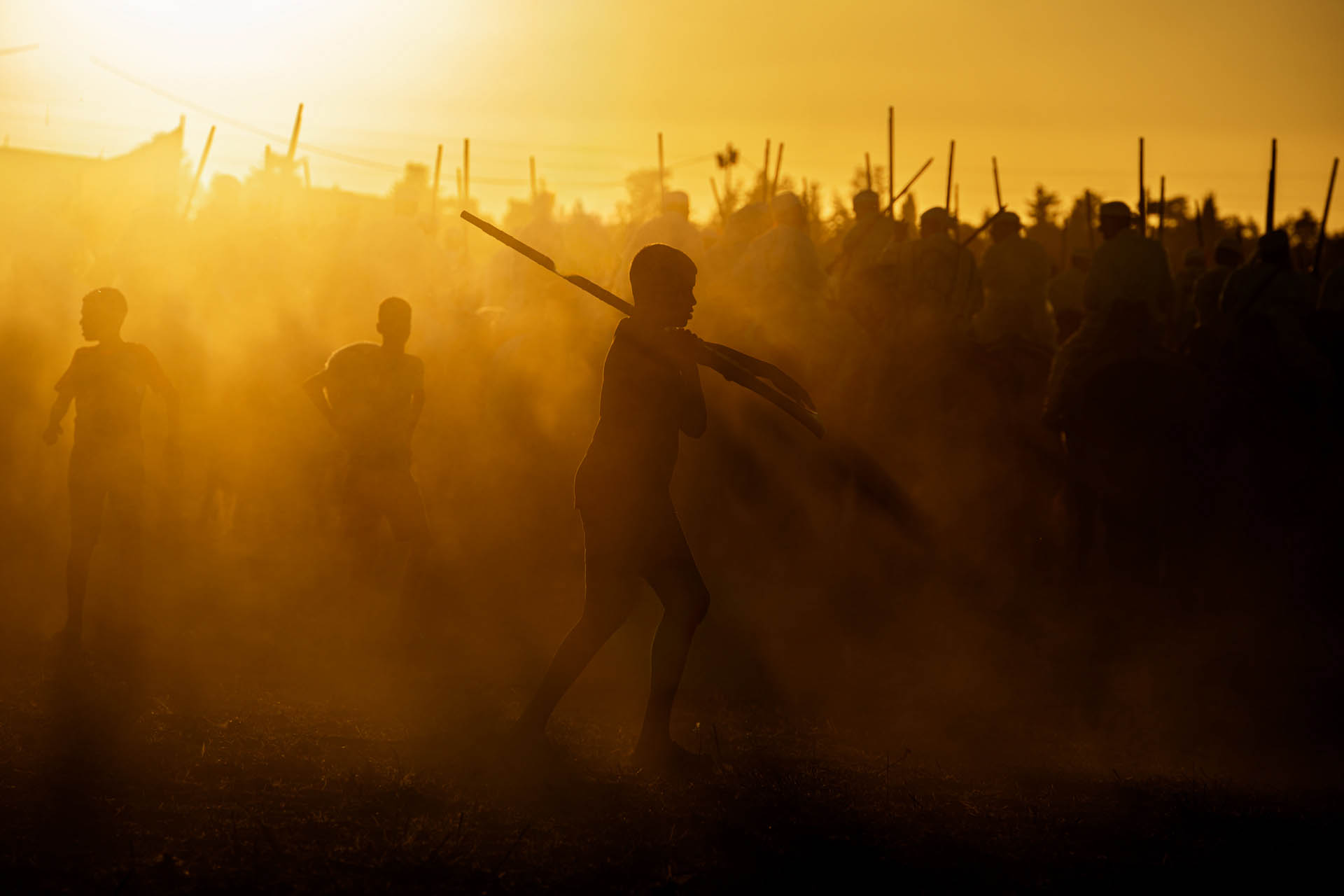
- Dust & Drama
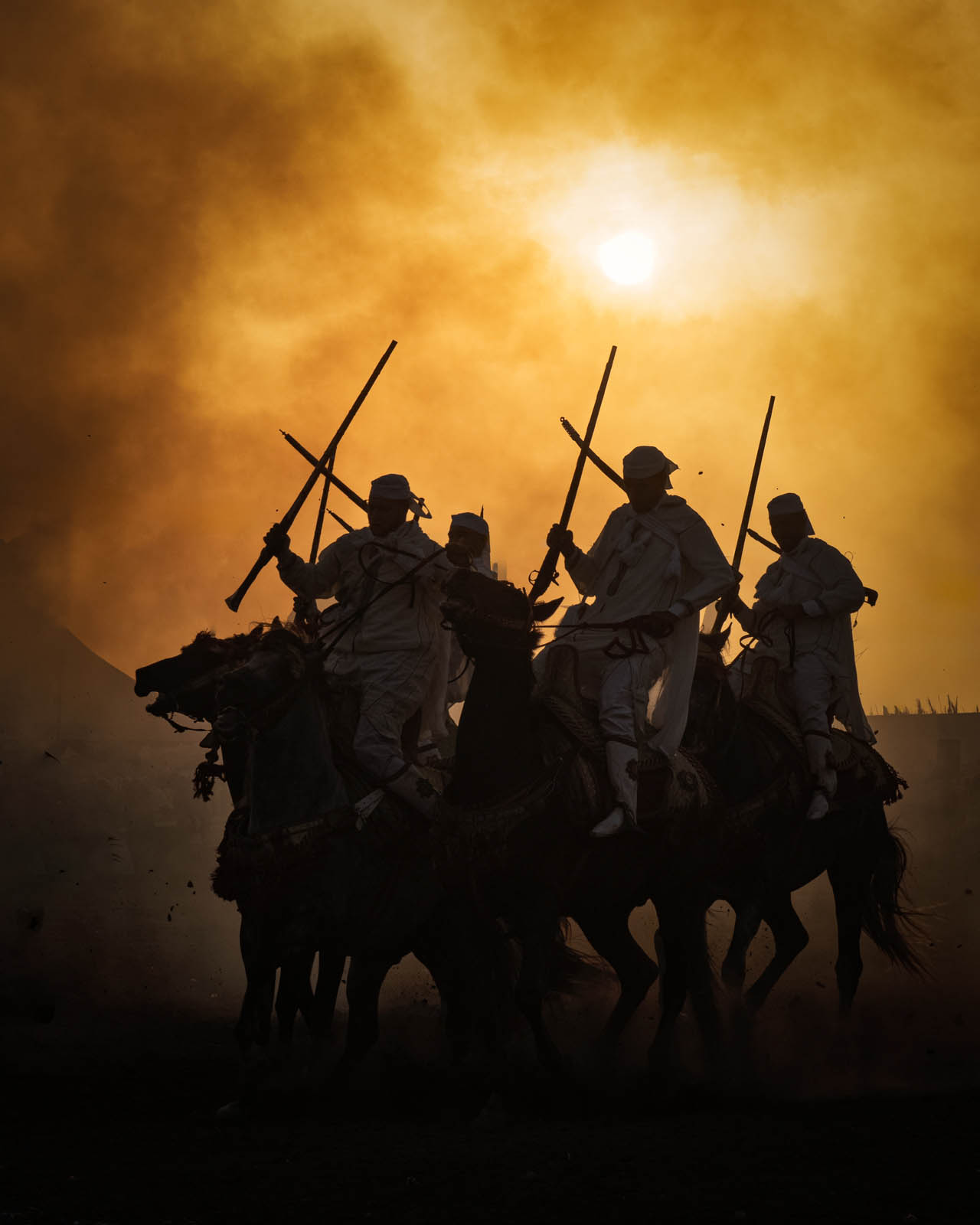
- Highlight dust clouds and sunlight interplay.
- Experiment with backlighting for atmospheric effects.
Midday Break
- Backup images and review key sequences.
- Hydrate and clean gear.
- Prepare for afternoon coverage.
Afternoon: Secondary Coverage
- Capture crowd reactions, judges, and organizers.
- Document secondary performances or other squads.
- Focus on environmental storytelling and human emotion.
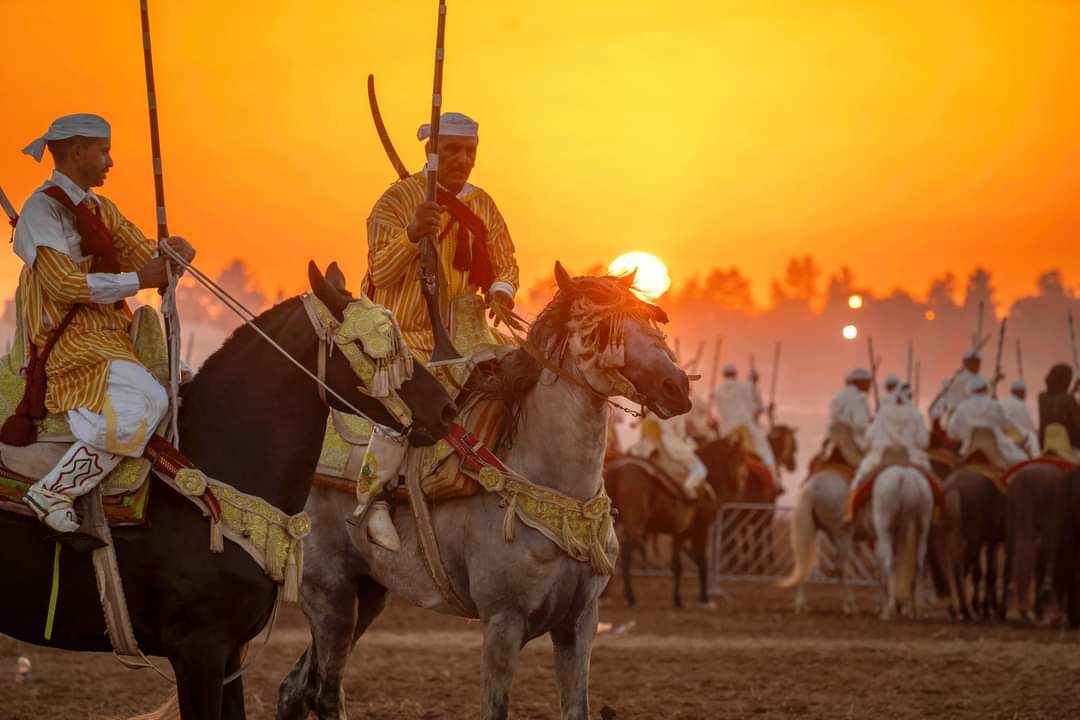
Golden Hour
- If a second round of performances occurs, shoot with side lighting for depth and texture.
- Emphasize warm tones and long shadows for cinematic results.
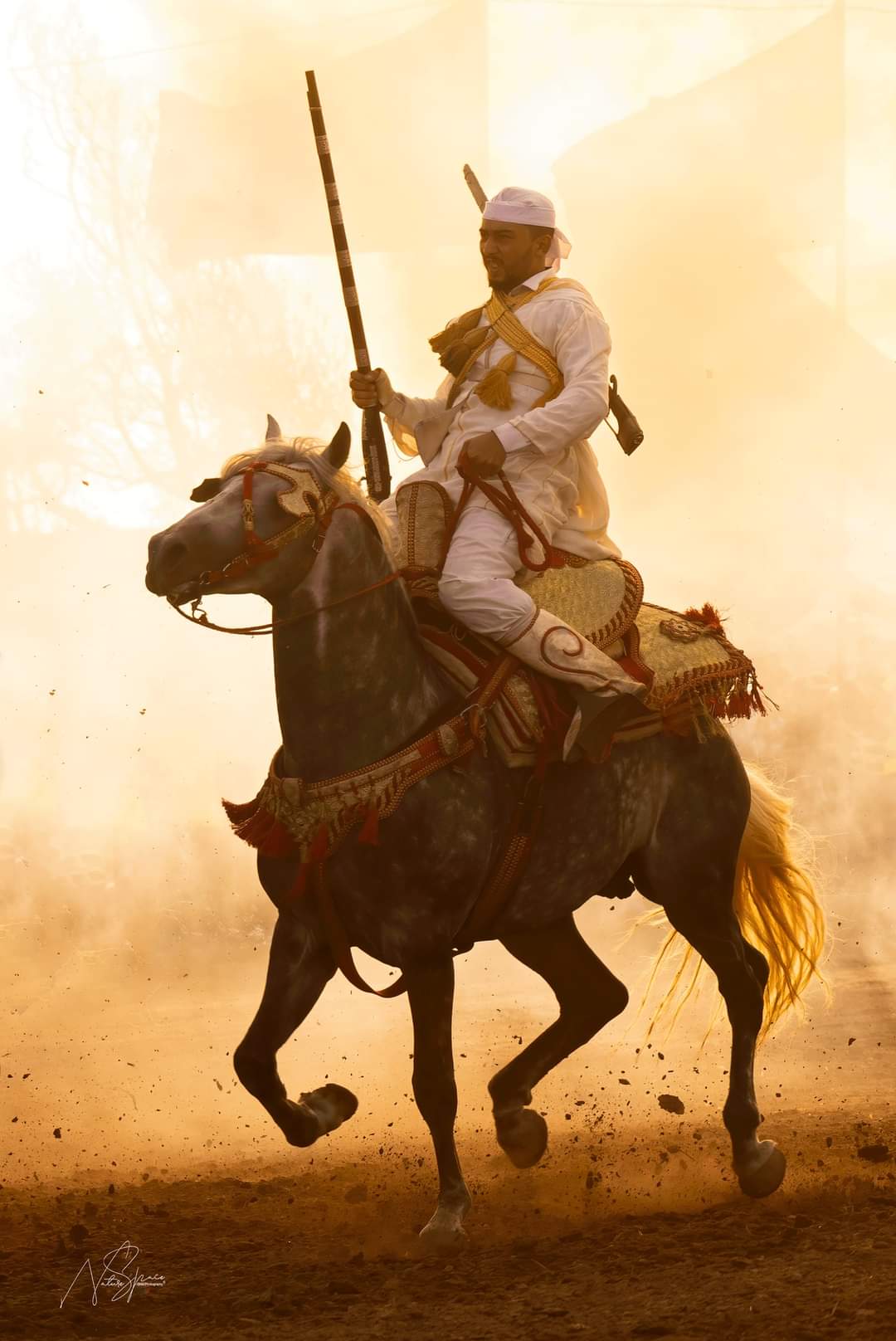
Day 2 — Portraits, Details & Cultural Context
Early Morning: Stable or Training Ground
- Return to a stable or local training area.
- Focus on quieter, intimate moments.
Photography Focus
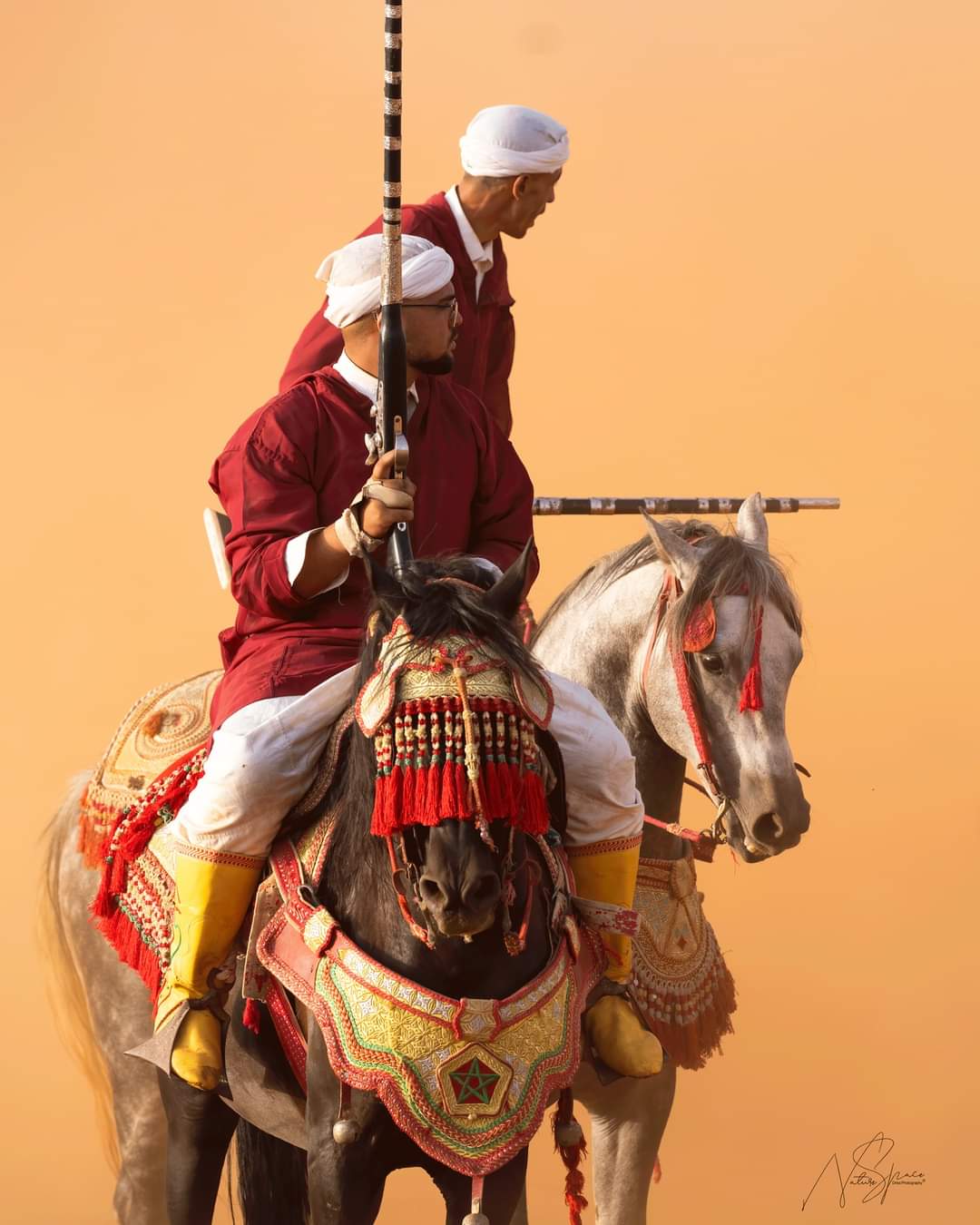
- Individual Rider Portraits: Natural expressions, traditional attire.
- Horse Close-Ups: Eyes, reins, movement, and muscle detail.
- Cultural Details: Clothing textures, equipment craftsmanship, traditional gear.
Midday: Lifestyle & Community
- Capture riders interacting, preparing horses, and engaging in rituals.
- Document community life surrounding the event—shared meals, laughter, and teamwork.
Afternoon: Environmental Portraits
- Use open plains or fields for environmental portraits blending riders and nature.
Evening: Golden Hour Wrap-Up
- Final portrait or detail session in warm light.
- Backup all files and prepare for departure.
- Respect event etiquette—seek permission before approaching riders or horses closely.
Day 3 — Story Completion & Artistic Shots
Morning: Pre-Event / Preparation
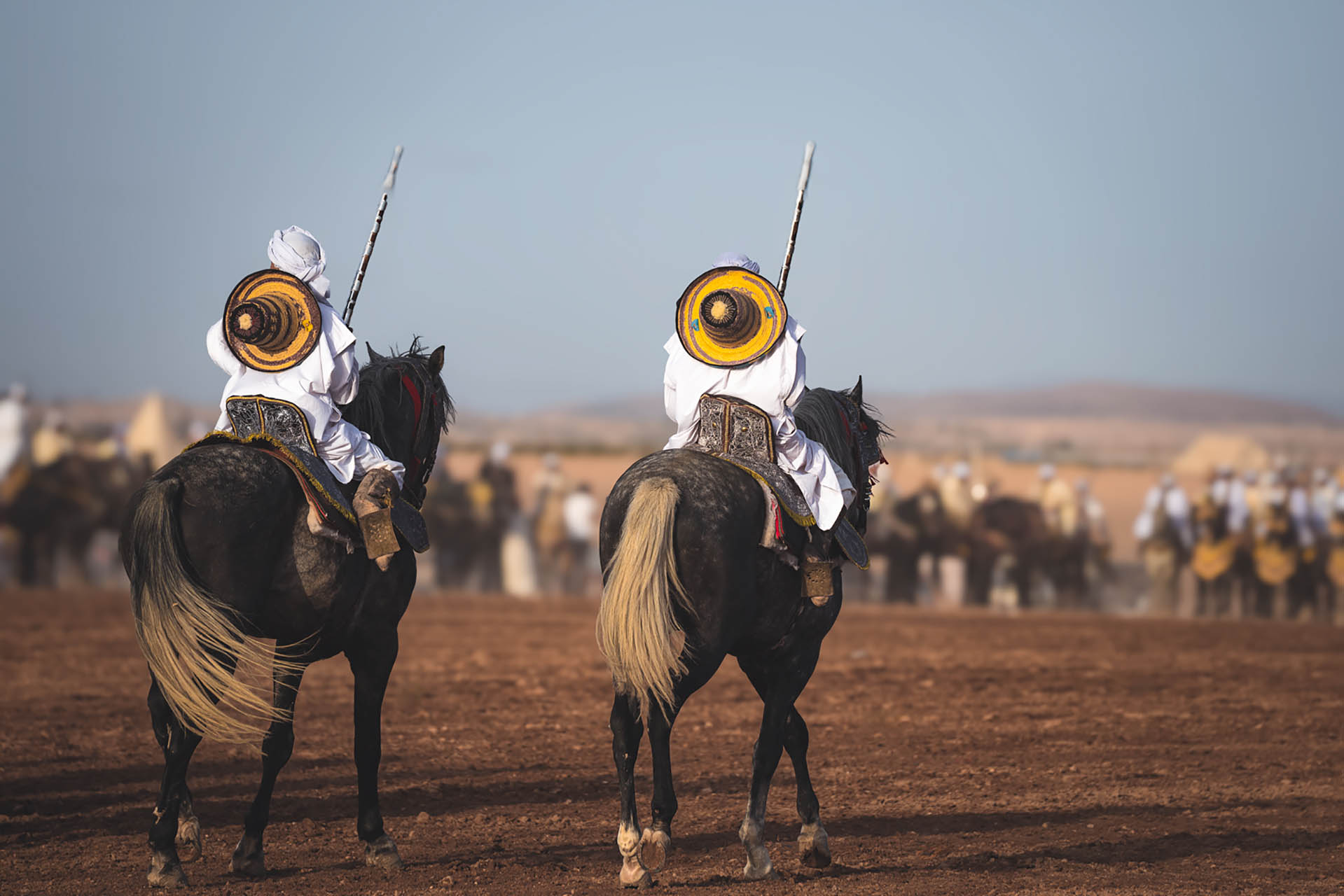
- Riders mounting horses and adjusting gear.
- Tight shots of hands, reins, saddles, and rifles.
- Portraits with candid, natural expressions.
Midday: Line Formation & Charge
- Wide shots of full squad alignment.
- Side angles showing symmetry and discipline.
- Capture the charge sequence again with refined timing and composition.
Afternoon: After the Charge
- Horses slowing down, riders regrouping.
- Expressions of pride, focus, and fatigue.
- Emotional storytelling through post-performance moments.
Evening: Detail & Artistic Shots
- Close-ups of horse eyes, hooves kicking dust, and fabric textures.
- Rifles with smoke residue and subtle lighting contrasts.
- Abstract compositions emphasizing motion and tradition.
General Tips